

Our Services
Ecological Services
As a full-service ecological consulting firm we have guided our clients through Florida’s changing regulations for nearly 40 years. Modica & Associates’ core ecological services include assessing properties to identify natural resources and assisting with integrating those resources into the development plan or mitigating impacts through permitting and compensatory mitigation. Our diverse clientele incudes landowners, developers, agricultural interests, mining operations, engineers, surveyors, attorneys, and local, state, and federal government and agencies. Modica & Associates' personnel are subject-matter experts that can provide comprehensive solutions to ecological constraints and assist in obtaining the necessary permits and regulatory approvals that a project may require. We maintain excellent working relationships with regulatory agencies and personnel, built on trust, facilitating the navigation of complex environmental rules and regulations and resulting in an expedited review of projects avoiding costly delays.

Wetland Delineation
Establishing the limits of jurisdictional wetlands and surface waters is critical in planning and engineering a project.
Our team members are well-versed in wetland delineation methodologies of the U.S. Army Corps of Engineers and the statewide delineation methodology promulgated in Chapter 62-340 of the Florida Administrative Code (FAC). Our ecologists are trained in wetland science and understand the interplay between dominant wetland vegetation, hydrology, and hydric soils that establish the jurisdictional wetland limits and can successfully defend the established wetland limits with the regulatory agencies to ensure that developable land is maximized. Modica & Associates works hand-in-hand with the project surveyor and engineer to integrate the wetland limits into the site plan development process to best balance resource protection, impacts, and mitigation.
Environmental Resource Permitting
Our team of experts will assist with project planning and coordinate with your development team to obtain the necessary permits your project requires.
This typically involves state wetland permitting either through one of the Water Management Districts or the Florida Department of Environmental Protection and may also involve federal wetland dredge and fill permitting through the U.S. Army Corps of Engineers for work involving Waters of the United States. Local government entities such as counties or municipalities may also have their own unique regulations involving work in or adjacent to wetlands. Knowledge of these regulations and experience working closely with the local regulators helps expedite the permitting process that can often be more stringent than either state or federal requirements.

Threatened and Endangered Species, Permitting and Relocation Services
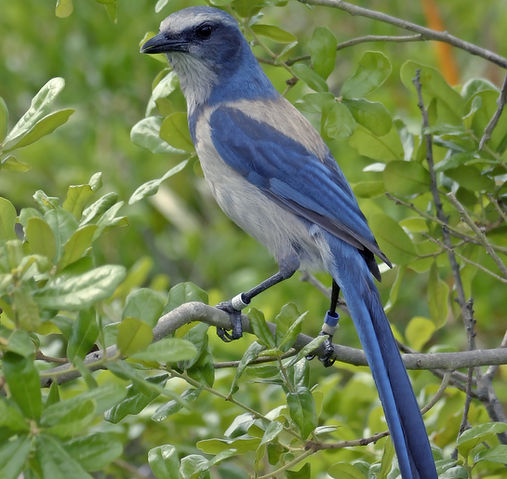
Our experienced staff of ecologists conduct habitat mapping, protected species surveys to evaluate a property for federally or state-listed species and support your project’s compliance with applicable laws.
We will perform preliminary site assessments to identify natural community types and determine the potential for protected species to occur within or adjacent to the project site. We will provide the critical advice needed to facilitate agency coordination, permitting requirements and cost-effective and practical mitigation strategies if there will be any impact to protected habitat or specific listed species. We regularly perform gopher tortoise relocations to move gopher tortoises from development areas to long-term conservation properties. Monitoring for protected bird species can also be provided to ensure that development adjacent to protected habitat or protection zones around nesting locations is not disturbing protected bird species such as the Bald Eagle, Red Cockaded woodpecker, Crested Caracara, southeastern American Kestrel, and Eastern Black Rail.
Hydric Soil Assessments
Hydric Soil Assessment: Hydric soils are primarily used as one of the components of wetland delineation. Efficient assessment of soils can enable accurate delineation of wetlands and reduce review time with regulatory staff. The USDA, NRCS currently recognizes 44 Hydric Soil Indicators and four Test Indicators in “Field Indicators of Hydric Soils in the United States”. Soil forming processes: parent material, time, climate, topography, and organisms result in the soil layers that we observe today.
Wet soils develop certain observable characteristics that, if near enough to the soil surface, provide evidence that the soils are wet during the rainy season, regardless of where the water table might be on any given day. Many environmental scientists have limited expertise regarding identification of hydric soils. Modica & Associates has a Certified Professional Soil Scientist on staff to assist in accurate assessment of soil conditions. Seasonal High Saturation: Accurate seasonal high saturation determinations are critical for proper operation of stormwater systems, septic systems, and construction design. Seasonal high saturation is often the starting point when assessing development of a site and getting this wrong can lead to substantial project redesign. The seasonal high saturation or seasonal high water table is the depth in the soil where saturation has occurred for a sufficient duration to cause soil characteristics consistent with anaerobic conditions. This point in the soil is characteristic of the water table during the wet season of a normal rainfall year and is not saturated most of the time. However, during above normal rainfall periods the water level can exceed this point for relatively short durations. Similar observable characteristics used as indicators of hydric soils are also used to identify the seasonal high saturation. If the characteristics are greater than the depth required to meet a hydric soil indicator, then the characteristic provides evidence of the seasonal high saturation. Subsurface Investigations: Unsuitable or unstable subsurface soil materials can compromise building foundations and result in failure of septic systems. These materials are relatively common and include soils with high organic content (e.g., muck), shrink-swell clays, and buried debris. Soil borings completed to a depth of 72 inches are generally sufficient to identify unsuitable materials or abnormalities in soil formation. If identified, remediation techniques to ensure successful project execution, will be provided.


Mitigation Banking, Planning, Design and Monitoring
Wetland mitigation and listed species conservation banking involves the establishment of large-scale protected natural habitats via preservation, restoration and enhancement of ecologically important land to offset impacts caused by development.
Regulatory agencies such as the Florida Department of Environmental Protection, the various regional Water Management Districts, U.S. Fish and Wildlife Service, or the Florida Fish and Wildlife Conservation Commission evaluate the proposed banks and assign credits based on the ecological value of the preserved or enhanced habitats. These credits can then be sold to offset future impacts within a geographical service area around the bank. Mitigation banking is favored to small project-by-project mitigation sites since banks consolidate mitigation into large landscape-scale conservation areas that are more likely to provide long-term successful habitat and species protection. Modica & Associates has extensive experience in wetland mitigation banking and conservation banking. We have successfully permitted wetland mitigation banks and conservation banks.
Gopher Tortoise Recipient Sites
Gopher tortoise recipient sites are protected, actively managed lands approved by the Florida Fish & Wildlife Conservation Commission to receive gopher tortoises relocated from development sites. Modica & Associates permits and manages gopher tortoise recipient sites for private and public landowners. With multiple Gopher Tortoise Authorized Agents on staff, we can assist landowners in evaluating a property’s suitability for use as a gopher tortoise recipient site.
